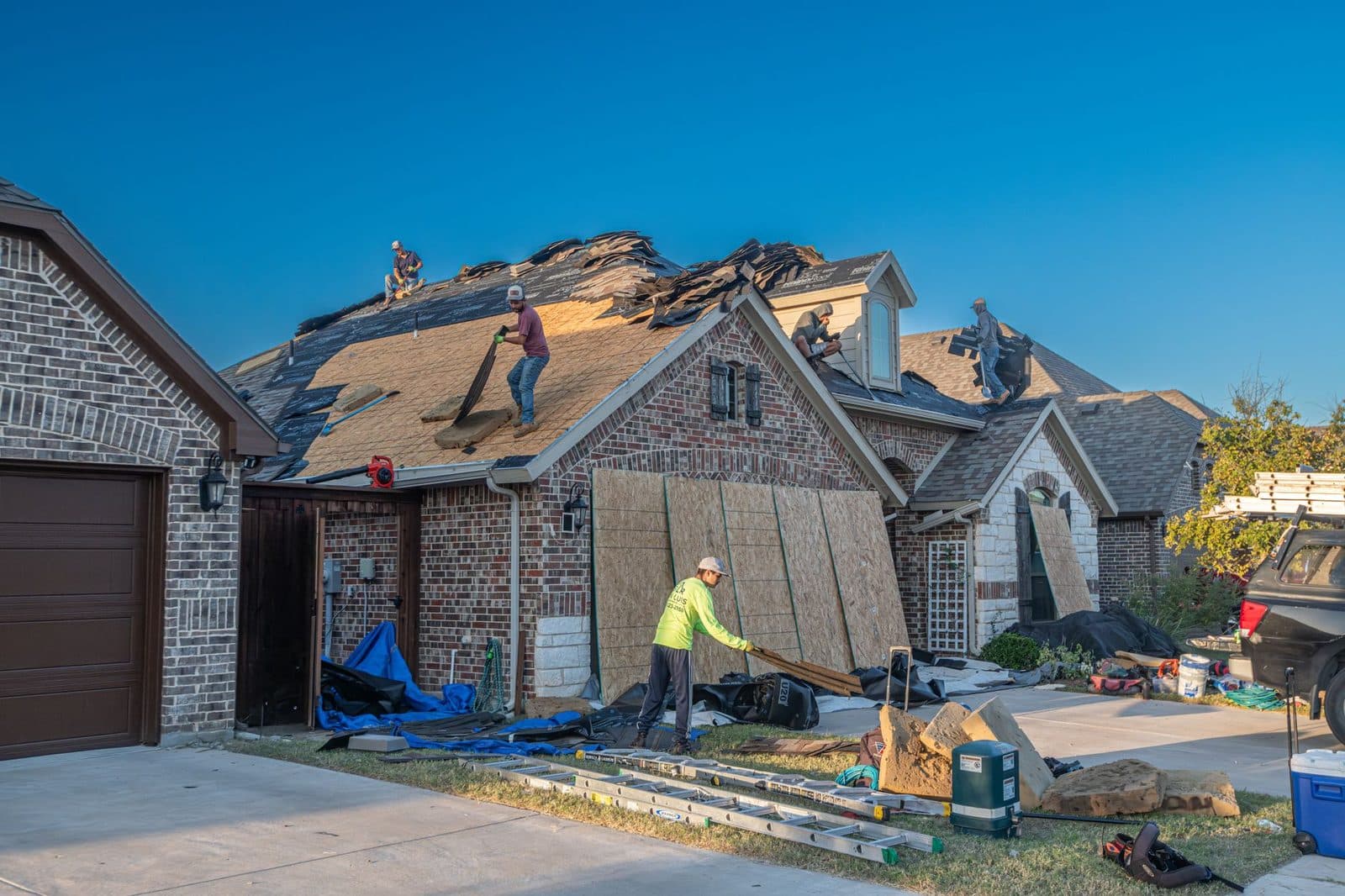
You already know this one. You're on a roof, under a house, or elbow-deep in an air handler, and the phone rings. You can't take it. By the time you call back at six, they've booked someone else.
What's worth knowing is how big that gap actually is, because the honest numbers are more useful than the ones that get passed around.
The numbers, and where they come from
- In a 2025 CallRail survey of 1,000 US consumers, 78% said they had abandoned a business over an unanswered call, and 82% went on to call a competitor.
- Only 42% of those consumers said they leave a voicemail. The rest simply move on — so "they'll leave a message" is true less than half the time.
- Invoca's 2025 benchmark found home-services phone leads convert at about 46% — the highest of nine industries measured.
- Invoca also found roughly 27% of calls to home-services businesses go unanswered.
- Harvard Business Review's 2011 study of 2,241 companies found that responding within an hour made a lead about 7x more likely to qualify.
The 46% is the one worth sitting with. In most industries a phone lead is a maybe. In home services it's close to a coin flip that lands in your favor — which means a missed call isn't a lost lead, it's a lost job.
A note on sourcing, because this matters: two numbers circulate constantly in this industry — that 78% of buyers go with the first responder, and that the average business takes 42 hours to reply. The first has no traceable original study. The second is real but comes from that 2011 Harvard study of general companies, and is usually misattributed to research about business software buyers, which is a completely different customer. Don't repeat either. You don't need them.
Why the usual advice doesn't work
"Answer the phone faster" is not advice, it's a description of the problem. You can't safely take a call from a ladder, and stopping a job to talk costs you the job you're already being paid for.
The realistic goal isn't answering every call. It's making sure no caller reaches silence.
What actually moves the number
Something responds within a minute, even if it isn't you
A text that goes out automatically when you miss a call — naming your business and saying when you'll ring back — holds the customer long enough to matter. Most people will wait for a business that has clearly acknowledged them. Almost nobody waits on silence.
Give them a way to reply that isn't a phone call
A number of homeowners, especially younger ones, would rather text than talk. If the only way to reach you is a voice call you can't answer, you're filtering out customers by preference rather than by fit.
Make the callback a scheduled thing, not a someday thing
Two fixed windows a day — lunch and end of day — beat good intentions. The goal is that nobody who called this morning is still waiting tomorrow.
Know what actually came in
Most contractors underestimate their missed calls because a missed call leaves no trace unless something records it. Pull your call log for one week and count. The number is usually higher than the guess.
Answer after hours with something honest
An after-hours message that gives a real next step — when you open, how to flag a true emergency — converts better than a generic voicemail greeting, and it screens the 11pm calls that aren't emergencies.
The one-week test
For one week, write down every call you didn't answer and whether you ever spoke to that person. Multiply the ones you never reached by your average job value.
That figure is what response time is costing you, in your market, at your prices. It's usually the most persuasive number in the business — and it's yours, not a statistic from a survey.